
ECG, 2D Echo & TMT Testing
ECG, 2D Echo and TMT at Kamalakar Heart Centre, Guntur
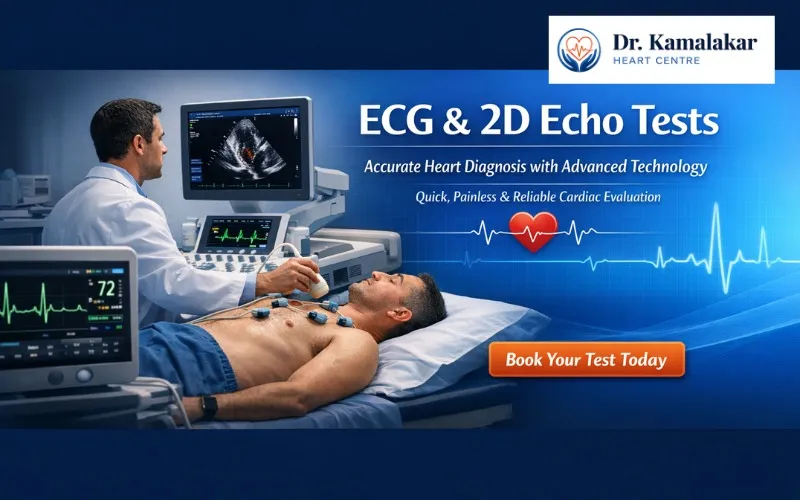
At Kamalakar Heart Centre in Guntur, we provide non-invasive cardiac investigations including ECG, 2D Echocardiography, and Treadmill Test (TMT) to help detect heart problems and guide treatment.
These tests can help identify heart rhythm abnormalities, structural heart conditions, valve disorders, and reduced blood flow to the heart. Which test is needed depends on your symptoms and is decided after a consultation.
ECG, 2D Echo and TMT at One Centre
At Kamalakar Heart Centre in Guntur, these tests are performed at the clinic and reported by Dr Kamalakar Kosaraju.
Electrocardiogram (ECG)
An ECG is a quick and simple test that records the electrical activity of your heart using small sensors placed on the chest.
- Duration: 5–10 minutes
- Detects: Irregular heartbeat, heart rhythm disorders, signs of previous heart attack
- Non-invasive; usually causes no discomfort
- Immediate results available
ECG is often the first step in evaluating symptoms such as chest pain, palpitations, or dizziness.
2D Echocardiography (2D Echo)
A 2D Echo is an ultrasound-based test that provides real-time images of the heart's structure and function.
- Duration: 15–30 minutes
- Evaluates: Heart chambers, valves, blood flow, and pumping efficiency (ejection fraction)
- Helps detect: Valve diseases, congenital defects, cardiomyopathy
- Non-invasive ultrasound; no special preparation required
This test gives a detailed view of how well your heart is functioning.
Treadmill Test (TMT) / Stress Test
The TMT evaluates how your heart performs under physical activity.
- Duration: 20–30 minutes
- Procedure: Walking on a treadmill with gradually increasing speed while ECG monitors heart activity
- Detects: Reduced blood supply to the heart (ischemia) that may not appear at rest
- Recommended for: Chest pain during activity, shortness of breath, diabetes, high cholesterol, or family history of heart disease
It is an important test for diagnosing coronary artery disease and assessing exercise tolerance.
Test Fees
- ECG — ₹200
- 2D Echocardiography (2D Echo) — ₹1,000
- Treadmill Test (TMT) — ₹1,200
- Cardiology consultation — ₹500, which includes a basic ECG
How ECG, 2D Echo & TMT Testing Works
Consultation and Test Recommendation
Dr. Kamalakar reviews your symptoms, medical history, and risk factors to suggest the most appropriate tests.
ECG Test (5–10 minutes)
Electrodes are placed on the chest to record electrical signals of the heart. The test is quick and provides immediate insights.
2D Echo Test (15–30 minutes)
An ultrasound probe is used to capture live images of the heart's structure and function.
TMT / Stress Test (20–30 minutes)
You walk on a treadmill while your heart activity is continuously monitored to assess performance under stress.
Results and Treatment Plan
All test results are explained clearly, and a personalized treatment or preventive plan is recommended based on findings.
ECG, 2D Echo & TMT Testing – Frequently Asked Questions
An ECG costs ₹200, a 2D Echocardiography (2D Echo) costs ₹1,000 and a Treadmill Test (TMT) costs ₹1,200. The cardiology consultation fee is ₹500 and includes a basic ECG.
An ECG takes about 5–10 minutes, a 2D Echo about 15–30 minutes and a TMT about 20–30 minutes.
No fasting is needed for an ECG or a 2D Echo. For a TMT, avoid a heavy meal for 2–3 hours beforehand, wear comfortable clothes and walking shoes, and ask your doctor whether to take your regular medicines on the day of the test, as some heart medicines can affect the result.
A TMT is not suitable for everyone. It is generally avoided in people with a recent heart attack, unstable or worsening chest pain, uncontrolled high blood pressure, severe narrowing of the aortic valve, uncontrolled heart rhythm problems or uncontrolled heart failure, and in those who cannot walk safely on a treadmill. A doctor should assess you before the test.
An ECG records the heart's electrical activity at rest. A 2D Echo uses ultrasound to show the heart's chambers, valves and pumping function. A TMT records the ECG while you walk on a treadmill, to look for reduced blood supply to the heart during exertion. Your doctor recommends a test based on your symptoms.
Related Patient Guides

ECG vs 2D Echo vs TMT — Which Heart Test Do You Need?
ECG, 2D Echo and TMT answer different questions about the heart. This guide explains what each test shows, when it is advised, and how doctors choose between them.
7 Warning Signs of Heart Attack You Should Never Ignore
7 warning signs of a heart attack every Indian should know — chest pain, breathlessness, jaw pain and more. Learn what they mean and when to act fast.